
← Interference-Resistant Temperature Monitoring Cables
ZS-P-SLD (Shielded Multipoint Temperature Monitoring Cable)
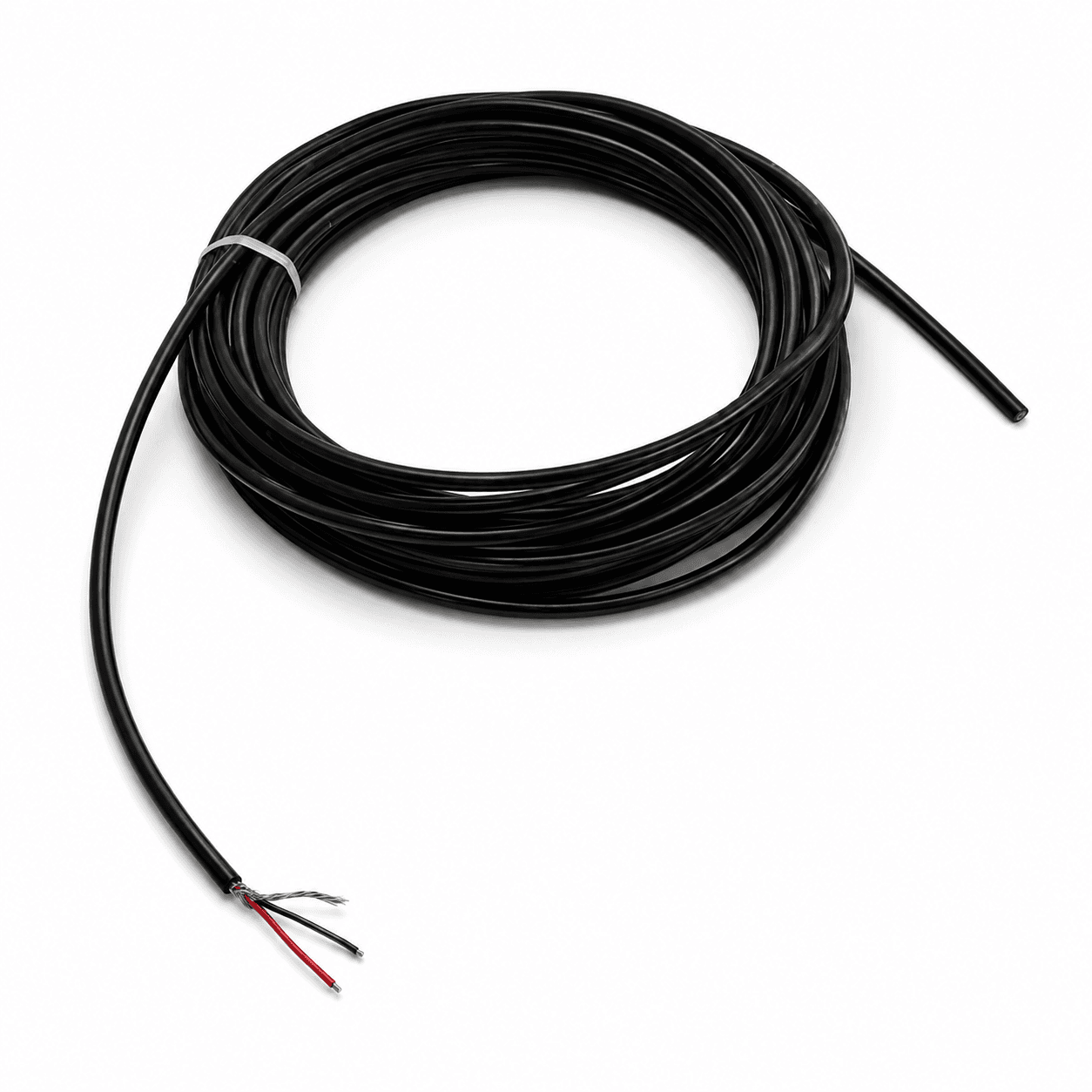
Shielded / static-dissipative temperature cable Key specs: 2/3-wire communication, up to 100 sensors, >300 kg tensile strength Category: Interference-Resistant Temperature Monitoring Cables
Product details
Key Features
- Two- or three-wire communication: Supports digital temperature monitoring using 2-wire or 3-wire connections.
- Consistent temperature accuracy: Measurement accuracy is unaffected by cable length.
- High sensor capacity: Supports up to 100 temperature sensors per cable.
- High tensile strength: Withstands tensile loads exceeding 300 kg.
- Temperature monitoring range: -40°C to 85°C.
- High-performance electromagnetic shielding: Braided copper or tinned-copper shielding reduces external electromagnetic interference.
- Shielding and interference discharge: Multiple interference-protection measures improve signal stability in electrically noisy environments.
- Pure copper conductors: Provide reliable electrical conductivity and signal transmission.
- Food-grade outer sheath: Manufactured with food-grade protective material, as specified by the manufacturer.
- Abrasion- and corrosion-resistant construction: Durable PVC outer sheath protects against mechanical wear, moisture, and environmental exposure.
- Water-resistant design: Manufacturer-specified IP58+ protection rating.
- Fully sealed temperature sensors: Internal sensor elements are encapsulated to prevent moisture intrusion.
Additional Details
The ZS-P-SLD is an industrial multipoint temperature monitoring cable designed for environments with high levels of electromagnetic interference, including power cable trenches, cable trays, air-cooled and indirectly cooled systems, and electrical cable joints.
Its internal construction incorporates braided copper or tinned-copper shielding to reduce interference from nearby electrical equipment and power transmission cables. Combined shielding and interference-discharge measures help maintain stable digital communication and reduce unstable temperature readings caused by electromagnetic disturbances.
The cable features pure copper signal conductors with integrated steel tensile reinforcement, providing reliable signal transmission while supporting tensile loads exceeding 300 kg.
Each cable supports up to 100 digital temperature sensors, enabling distributed temperature measurement along electrical infrastructure, industrial cooling equipment, and other installations where conventional unshielded sensor cables may experience communication interference.
The protective PVC outer sheath provides abrasion resistance, corrosion resistance, and water protection, while fully sealed temperature sensor elements help prevent moisture intrusion.
With its compact 9 mm outer diameter, flexible installation options, and compatibility with digital temperature data collectors, the ZS-P-SLD is suitable for continuous temperature monitoring in demanding industrial electrical environments.
Technical Specifications
| Temperature monitoring range | -40°C to 85°C |
|---|---|
| Temperature accuracy | ≤±0.5°C |
| Temperature repeatability | ≤±0.2°C |
| Maximum sensors per cable | 100 |
| Communication wiring | 2-wire or 3-wire digital signal |
| Supply voltage | 3–5.5 V DC, supplied by data collector |
| Cable outer diameter | 9 mm |
| Protection rating | IP58+ (manufacturer-stated) |
| Tensile strength | Greater than 300 kg |
| Signal conductors | Pure copper |
| Shielding | Braided copper or tinned copper |
| Reinforcement | Integrated steel tensile-strength wire |
| Conductor cross-section | 0.3 mm² |
| Outer sheath material | PVC |
| Temperature conversion time | 750 ms |
| Power consumption | 0.03 mA per sensor at 5 V DC |
| Typical service life | Over 3 years |
| Customization lead time | 10 days |
| Installation method | Application-dependent |
| Compatible equipment | Digital temperature data collectors |
| Available configurations | Inline cable and branched probe configurations |
Typical Applications
- Power cable trenches and cable trays
- Electrical cable joint temperature monitoring
- Air-cooled and indirectly cooled industrial equipment
- Industrial electrical installations with electromagnetic interference
- Distributed temperature monitoring along power infrastructure